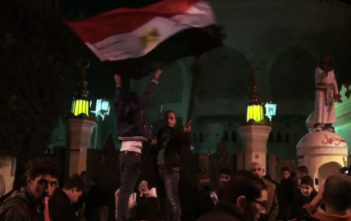
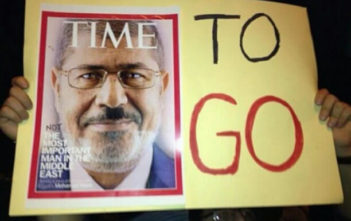
Egyptian President Mohamed Morsi has scrapped the wide ranging and controversial decree that gave him any powers to “protect the revolution” after widespread unrest and continuing protests in Tahrir Square.
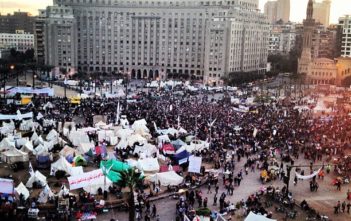
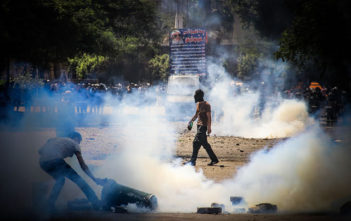
The protests in Tahrir Square against President Morsi’s constitutional declaration are continuing despite attacks from members of the Muslim Brotherhood and remnants of the Mubarak regime.
After President Morsi’s Constitutional Declaration providing him with unprecedented sweeping powers, the Muslim Brotherhood in Egypt faces unprecedented protests. Is this a sign of its political weakness?
The constitution, approved in the midst of a political standoff between the president and the judiciary, provides for basic protections against arbitrary detention and torture and for some economic rights but fails to end military trials of civilians or to protect freedom of expression and religion.
In what is being described as the third wave of the Egyptian revolution, Egyptians across the country have taken to the streets again to demonstrate that they are more than willing to take down another tyrant in the making.