
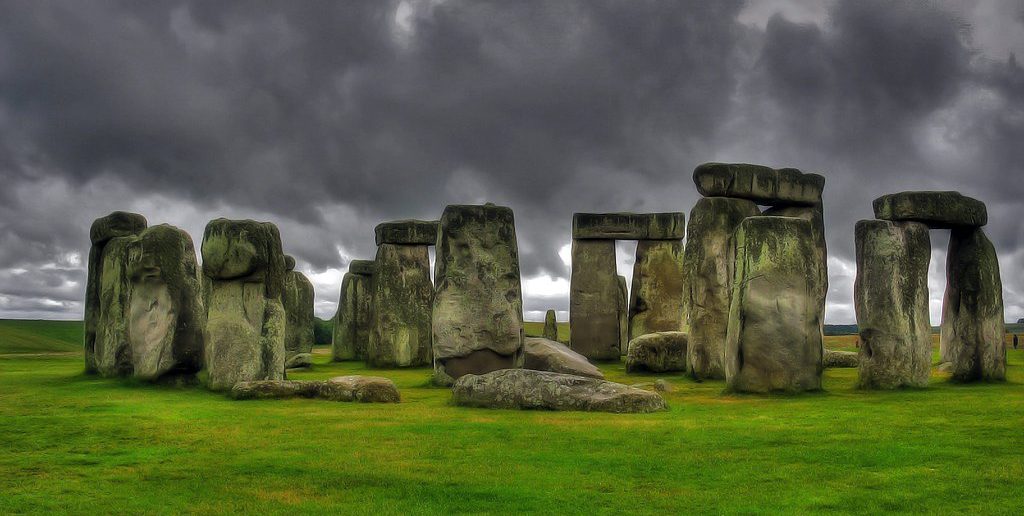
Archaeologists have produced a detailed map of the earth beneath Stonehenge and its surrounding area, showing the scale of the shrines located in the area for the first time.
The researchers used ground penetrating radar, a 3D laser scanner, a magnetometer, and other tools to examine the 12km2 site and found 17 ancient shrines buried in the vicinity of Stonehenge.
Traces of 60 huge stone pillars were found surrounding Stonehenge, which would have made up the 1.5km-wide “super henge” previously discovered at nearby Durrington Walls.
One of the numerous mounds around the site was also found to be covering the remains of a 33x9m2 trapezoidal-shaped timber building, which is estimated to be around 6,000 years old and may have been used for ritual burial practices.
Another 17 mounds were discovered for the first time by the analysis, and revealed unseen ritual monuments, which were dated to the period in which Stonehenge was built by their shape.
Two additional pits were also discovered inside the huge circular trench or Cursus at the site, with the pits aligned in the East-West direction, pointing to dusk and dawn, similar to the alignment of Stonehenge itself, which was built 300-500 years later.
The preliminary findings demonstrate the evolution of the site over many centuries, and further analysis will reveal more precisely how these changes were made.