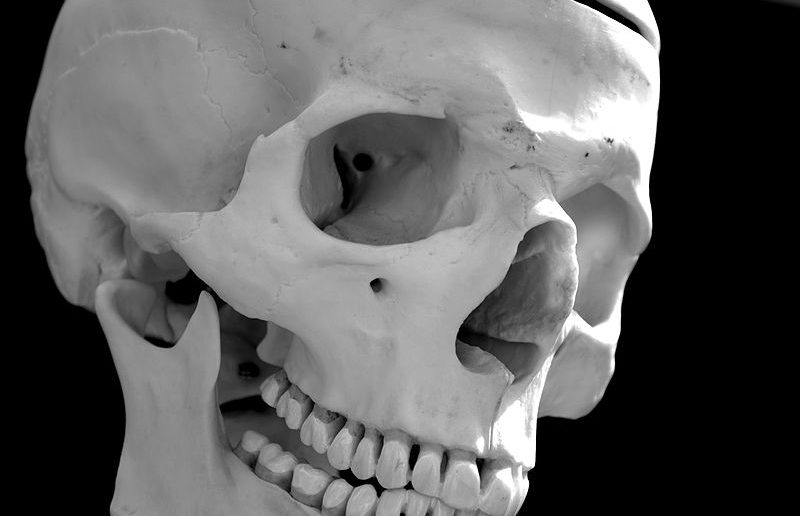
Photograph by Steve Snodgrass
A team of researchers have discovered the DNA of pathogens and ancient foods in calcified plaque on the teeth of 1,000 year old skeletons that is the microbial version of Pompeii.
In a report published in the journal Nature Genetics, researchers from the University of York, University of Zürich, and the University of Copenhagen revealed that as calculus grows slowly in the mouth and is much more stable than bone when it enters the soil, it is better able to preserve biomolecules than bones.
The team, led by Dr Christina Warinner, applied shotgun DNA sequencing to the calculus and then identified and sorted the millions of genetic sequences finding a periodontal pathogen and a number of vegetables showing to help describe the ancient diet.
This information has major implications for understanding the evolution of the human oral microbiome and could help uncover the origins of periodontal disease in ancient human history.
Professor Christian von Mering, an author of the study and Group Director at the SIB Swiss Institute of Bioinformatics, which performed the bioinformatics analysis, said:
“Dental calculus is a window into the past and may well turn out to be one of the best-preserved records of human-associated microbes”