
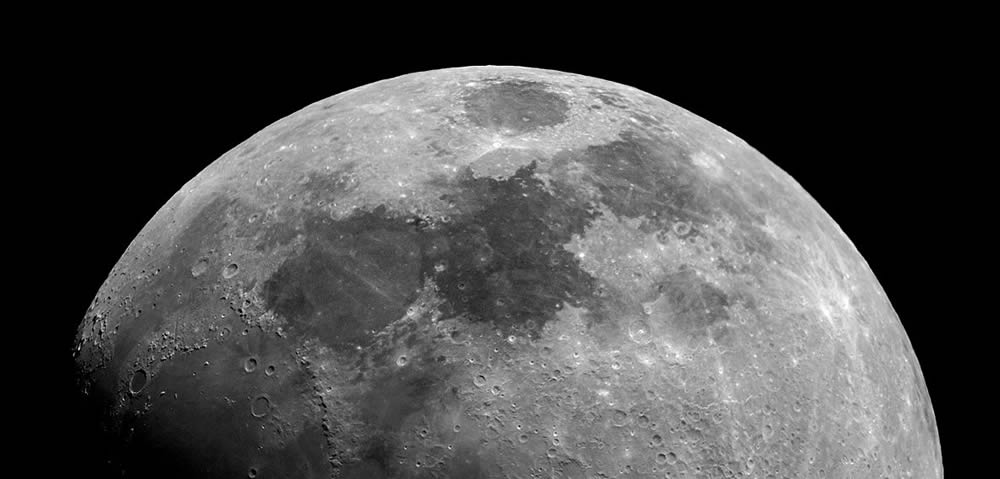
Lunar rocks have provided the first direct evidence of the collision between a proto-Earth and a Mars-sized planet that created the moon.
The rocks were collected from the Moon by astronauts on Nasa’s Apollo missions, but modern scanning electron microscopes have allowed researchers to detect chemical traces of Theia, the long-theorised planet that collided with Earth around 4.5 billion years ago.
The scientists led by Daniel Herwartz of Germany’s Georg-August-Universität Göttingen investigated the theory that if the Moon was formed from debris from Theia thrown out into space after the collision then the chemical make-up of rocks on the Moon should differ from those found on Earth.
Publishing their findings in the journal Science, the researchers found that the lunar rocks contained around 12 parts per million more of the heavier oxygen-17 isotope than the rocks on Earth, which suggests that 30-50% of the Moon could be made up of material from Theia.