
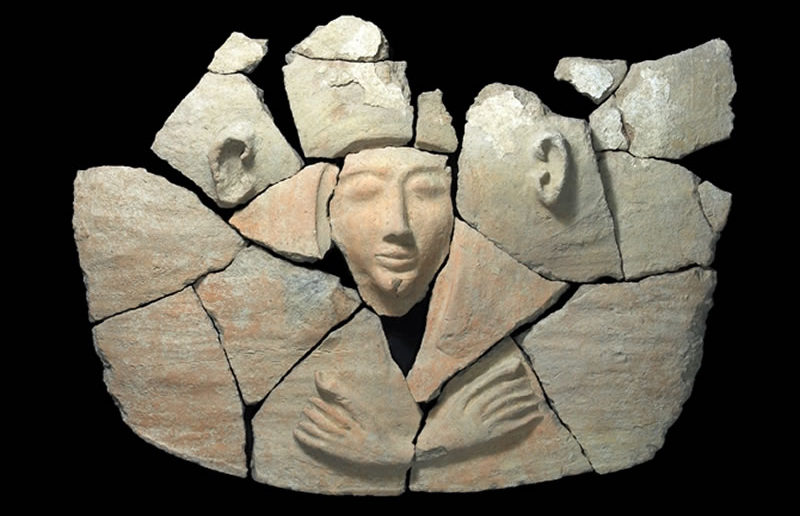
A 3,300-year-old Egyptian sarcophagus complete with skeleton and a gold Pharaonic seal has been uncovered in Israel’s Jezreel Valley, according to the Israel Antiquities Authority (IAA).
The clay coffin and surrounding burial site, which dates back to the 13th century BC, were discovered during construction work for the installation of a gas pipeline near Kibbutz Sarid, about 15km southwest of Nazareth. Other items discovered near the coffin include a gold signet ring with a gold-encased scarab seal bearing the name of Seti I, a bronze dagger, a bronze bowl, tableware, animal bones, and the burials of two men and two women.
Pharaoh Seti I was the son of Rameses I, father of Rameses II, and ruled Egypt between 1290 and 1279 BC, a period where Jezreel Valley was under Egyptian control.
Archaeologists investigating the site believe the skeleton to be of a Canaanite man who was in the service of the Egyptian government, with his burial offering the hallmarks of an Egyptian burial, but with locally produced items. However, the IAA plan to analyse the man’s DNA to determine his origins more accurately.