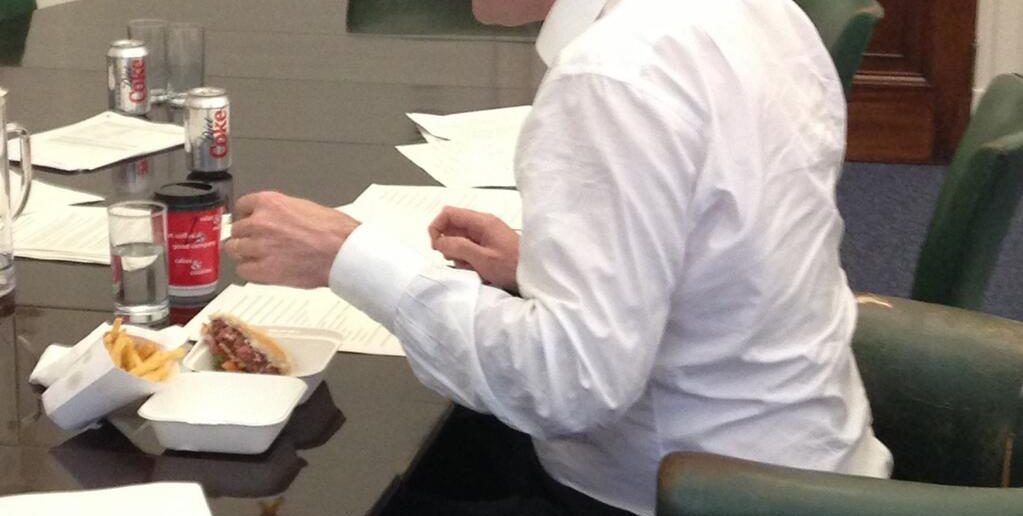
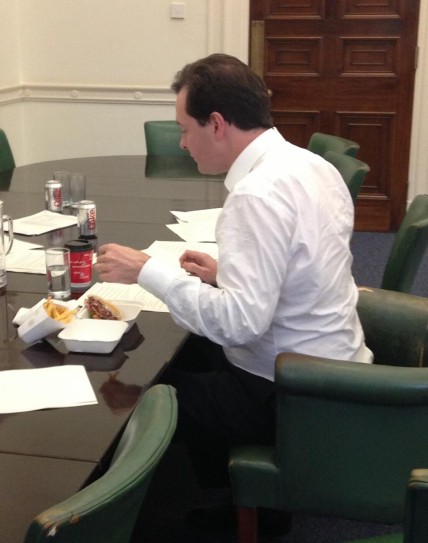
George Osborne putting the final touches to the Spending Review.
Photograph by George Osborne
Chancellor George Osborne is preparing to announce a spending plan which includes £11.5 billion in cuts for the year 2015/16 in an attempt to bring down the deficit.
Following a similar structure to the governments previous rounds of cuts, health, schools in England, and foreign aid budgets will be ring fenced, leaving other departments with a bigger share. Labour has said it will maintain the plans if they win the next election in May 2015.
Osborne will outline the Spending Review in the House of Commons from 12:30pm BST, but a number of news outlets have made predictions about some of the details:
- More than 100,000 expatriate pensioners living in warmer countries will lose their winter fuel payments – Daily Mail
- Thousands of civil servants will lose their annual incremental pay rises in a fresh push towards performance-related pay across Whitehall – The Times (£)
- Local government will be the hardest hit – The Guardian
- Increase in spending on the intelligence services, with MI5, MI6, and GCHQ getting an above-inflation rise to their £1.9bn budget – Daily Telegraph
- Increased investment in capital projects such as transport, and science – BBC
The cuts come after weeks of wrangling with government departments, with Vince Cable’s Department for Work and Pensions being the last to agree to the cuts according to reports.
The government’s austerity has come under criticism over recent months from both opposition parties and the IMF, who have warned that the cuts have come to quick and fast. The chancellor had initially hoped to eliminate the structural deficit by 2014/15, but the date for this has now slipped back to 2017/18, with the government borrowing £275 billion more during this parliament than originally expected.
Osborne has said that the government has no plans to move away from austerity, saying:
“I’m confident we are coming out of intensive care and we can turn this country around. There’s certainly a chance of a relapse if we abandon our plan.”