


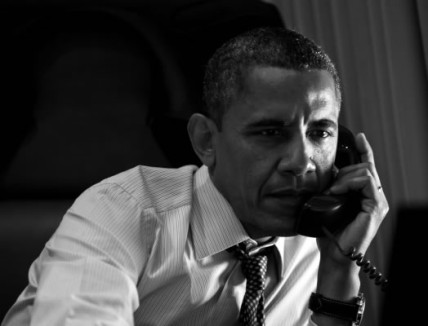
Barack Obama. Photograph by Pete Souza
US President Barack Obama has postponed Congress’ vote on military action in Syria to pursue diplomacy to remove Bashar al-Assad’s arsenal of chemical weapons, but issues over how to enforce this plan remain.
Whilst it has been widely known that Syria, one of the handful of countries that are not signatories of the Chemical Weapons Convention, housed large quantities of chemical weapons, Damascus has for the first time publicly admitted this is the case for the first time. The Assad regime has also agreed to a Russian plan to hand over this arsenal to the international community for disarmament/dismantling.
Syria has been under increasing pressure about its chemical weapons after 1,400 people were reported to have been killed from a sarin gas attack in the Ghouta suburb of Damascus on 21st August. Damascus has continued to proclaim its innocence over the attack, but UN inspectors found traces of sarin at the site, and the attack on a rebel-held area.
Obama called the use of chemical weapons by Assad as a “red line” in a speech last year, and whilst there have been a number of claims of chemical attacks since then, an attack of the scale of the one in Ghouta could not be ignored. After intelligence confirmed the attack, both the US and France have been moving towards some form of military intervention in Syria, with today’s vote in Congress the final barrier to action.
The idea of removing all of Assad’s chemical arsenal came from a comment by US Secretary of State John Kerry after a question at a press conference of how Syria could avoid military intervention at this late stage. The plan was then seized upon by Russia, which has remained a staunch ally of the Assad regime throughout the Syrian civil war, and Damascus was quick to accept the offer with the Syrian Foreign Minister Walid Muallem stating last night that the country would declare its full chemical arsenal and sign the Chemical Weapons Convention.
This possibility for a diplomatic solution has given Obama reason to pause on his plan for limited military intervention in the conflict, with Assad’s chemical arsenal a real threat to US interests if it fell into the wrong hands.
Momentum had been building behind the Russian plan for chemical disarmament, but hit a roadblock today when Russia rejected US and French demands for a binding UN resolution with “very severe consequences” for non-compliance. The original Russian plan has been cautiously accepted by the US, France, and the UK, but without the amendments over non-compliance all are cautious that the plan may just be a stalling tactic.



1 Comment
Hi,
Syria: Assad regime responsible for eight massacres, rebels one, UN says. Mr. Cameron should take a” no” key. The problem in Syria is an age old ethnic problem similar to Northern Ireland but more serious. Mr. Cameron’s effort to ease the Northern Ireland problems has made the situation worse with the anti-social extreme measures such as the bedroom tax, benefits cuts in a hard hit area and he wants a war in Syria. He will harvest international critic from respectable organizations.