
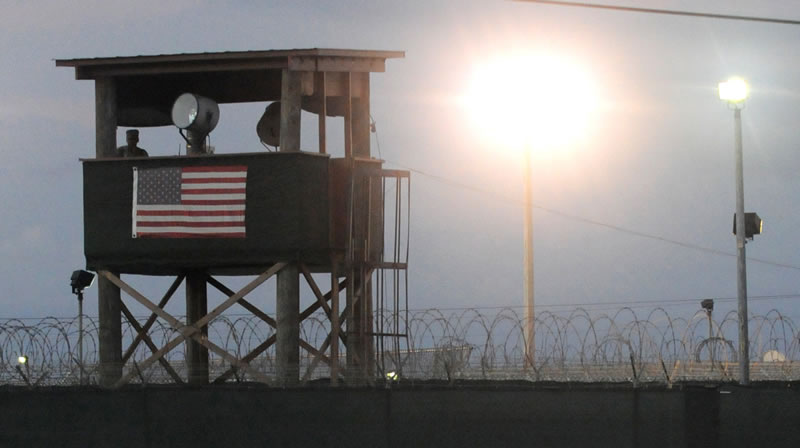
Guantanamo Bay. Photograph courtesy of the US Army
Closing the Guantanamo Bay prison camp was one of President Barack Obama’s promises on the campaign trail before his first election in 2008, but it remains a blemish on the “land of the free”.
The protracted and widespread hunger strikes by a large number of Guantanamo detainees has brought the issue of having prisoners still held without charge at the facility with no trial in sight. Some have now been detained for over a decade in these conditions, and with starvation their only chance at protest, many have refused to eat.
In a recent interview with CBS News, President Obama has shown his desire to close the camp, saying:
“Guantanamo is not necessary to keep America safe. It is expensive. It is inefficient. It hurts us, in terms of our international standing. It lessens cooperation with our allies on counter-terrorism efforts. It is a recruitment tool for extremists. It needs to be closed.”
However the camp still remains open four years after Obama was first elected to the White House. This is partly due to a lack of political will from the other Washington institutions of power to close the camp, with it difficult to find where to place the current detainees with the rate of those returning to fight against the US after release so high.
A medical team was recently called to the camp to help deal with the 100 detainees currently on hunger strike, a number of whom are now now being force fed via tubes to prevent their deaths. These hunger strikes have brought attention to the plight of these detainees, and now that Obama does not face another re-election, he may start to force the issue through and get the camp closed.