
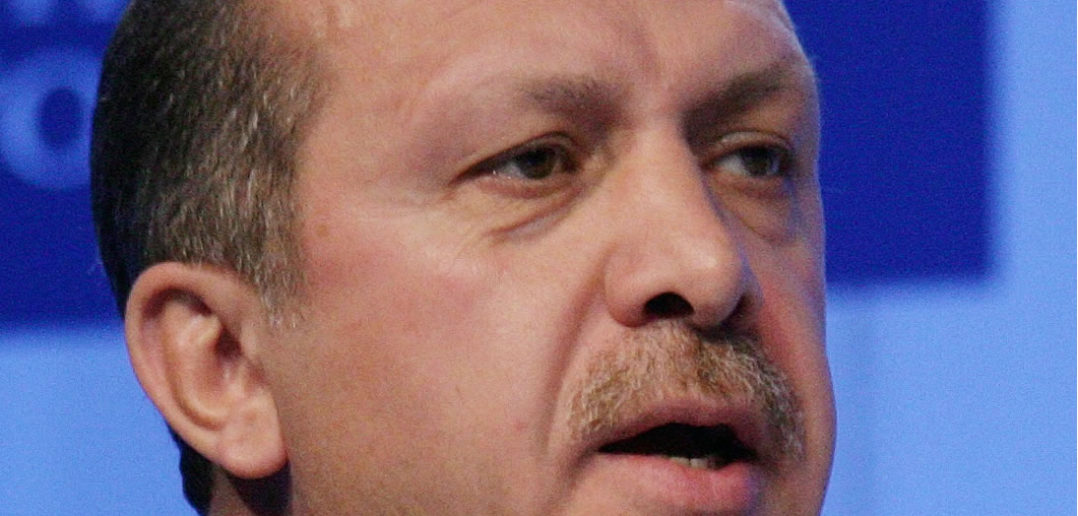
Recep Tayyip Erdogan. Photograph courtesy of WEF
Erdogan has claimed that the voice recordings of his son are a fabricated montage. In a speech in Denizli Erdogan argued that Gülen and the Hizmet movement is responsible for leaks which are part of a conspiracy against his leadership.
Last week unverified voice recordings purporting to be of Prime Minister Erdogan warning his son about the 17th December corruption arrests were posted on YouTube. The clip appears to show Erdogan instructing his son Bilal to dispose millions of Euros in cash. In the video voices talk about making the money “zero” by being distributed through business associates. The video received over 1.5 million views in 24 hours.
Today’s Zaman, one of Turkey’s newspapers, noted that by blaming the Hizmet group Erdogan is circumnavigating the allegations against him. Commentators have gone so far to call this a tactic of Erdogan’s, consistently attributing the accusations of corruption to the work of a group plotting to overthrow his government. Such groups, according to Erdogan’s speeches, tend to have overseas supporters with vested interests in Turkey’s downfall.
Since the corruption scandal emerged so violently on 17th December the term ‘parallel state’ has been introduced to the government’s repertoire. It refers to the Hizmet movement, a movement which follows Fetullah Gulen, an Islamic preacher who has been living in Pennsylvania since 1999. People involved with the Gulen movement and the corruption allegations have been labelled “domestic collaborators”.
Turkey’s commentators have also been anxiously noting the rise in hate rhetoric in Erdogan’s speeches, referring to the Hizmet movement as a “gang”, a “virus” and most recently “vampires”. This discourse is being criticised by many as an attempt to further polarise Turkey’s voters and erode social cohesion ahead of the local elections later this month.
Since the corruption scandal broke onto the pages of Turkey’s dailies and social media there have been two major legislative changes from the AKP, Erdogan’s party. The first tightened the government’s control over the internet. It was criticised by many international organisations for lacking clarity, giving the government unfettered discretion to block pages and investigate users without judicial approval. Amnesty International criticised this bill for directly violating the public’s right to privacy without having to provide a proportional justification to an independent body.
The second bill reduced the power of Turkey’s judiciary by increasing the Justice Ministry’s control over the Supreme Board of Judges and Prosecutors, a formerly independent body responsible for appointing members of the judiciary. This development is a notable U-turn from the referendum in September 2010 when the power of the Justice Ministry was reduced with 58% public approval.
Columnists are saying that if the AKP fail to get 35% of the votes in March’s local elections Erdogan will not be the next Prime Minister of Turkey. Some predict that such a result would illustrate a lack of legitimacy in the eyes of the people and thus cause members of his own party to challenge his rule.
However, if he earns more than 40% of the votes he would have solidified his position, this time without the support of the Gulenists, a religious group which some believe to hold a powerful sway over Turkish politics.
On Monday the leader of the MHP (Nationalist Party) spoke to crowds in Kirklareli province saying that after corruption cases like this dictators have fallen, citing examples from Indonesia, Tunisia and Egypt, “I want to emphasise that you [the people]should reflect upon this topic when you got to the polls.” Kiliçdaroglu added that he respects the democratic choice of the people, but warned that the public should not help politicians profit illegally with their votes.
Kardas, a retired colonel and former military judge, speaking to Today’s Zaman on Monday warned that preventing the judiciary from functioning is a criminal act. By refusing to have the corruption allegations investigated because of this “parallel state” conspiracy could lead to the impeachment of Prime Minister Erdogan in the future.