
Photograph courtesy of Syria Freedom House
The Syrian civil war has become a stalemate in recent months, with neither the rebels or the Assad regime making much progress, whilst the casualties continue to mount. Is a ceasefire now apolitical possibility?
The official line from the Syrian regime has consistently been that they are open to negotiations for reform, but at the same time Assad continues to deny that the conflict is a civil war and that the rebels are foreign jihadis, and that his government will prevail.
In an interview with the Guardian, the Syrian Deputy Prime Minister Qadri Jamil has admitted that the situation has become a stalemate, and that neither side was now strong enough to win the war. He is reported as describing the heavy human and economic loss of the conflict with 100,000 people now killed and the Syrian economy losing around $100 billion (£62 billion).
The Assad regime has since rolled back these comments, and Jamil has said he was inly speaking for his party, a smaller secular Syrian political party, and not the government. However, proposals by such lower level politicians have long been how the Assad regime have floated ideas to a wider audience before deciding on how to proceed.
In this case, by proposing the idea of a ceasefire, the Assad regime are attempting to define themselves to the international community as the side looking to end the bloodshed, leaving the opposition looking divided and the aggressors.
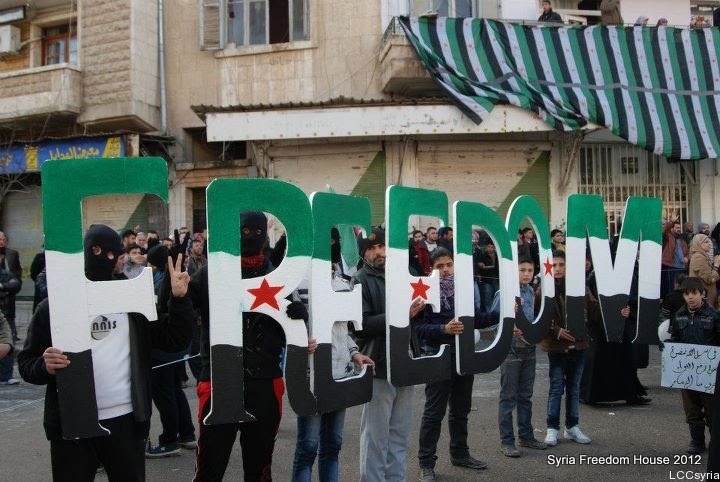
Whilst the regime are attempting to appear as a “unifying” force within Syria, the opposition rebel groups continue to look divided with the al-Qaeda-backed Islamic State in Iraq and Syria (ISIS) fighting against the more secular and local Free Syrian Army (FSA) in recent days in the town of Azaz. These two groups have now called a truce, but the broad divisions in aims and ideas are apparent.
Whilst the international community concerns itself with the possibility of securing and destroying Syria’s chemical weapons arsenal, the fighting continues and the bodies mount. As both sides begin to recognise the stalemate, could a ceasefire be found and negotiations for reform begun.