
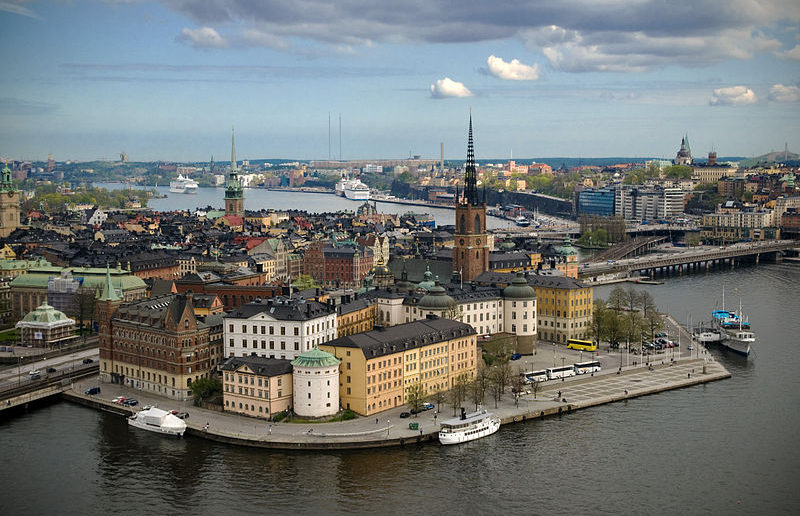
Stockholm. Photograph by Benoît Derrier
A handful of cars were set alight on Monday night, but after a week of riots spreading across Stockholm, the situation is now returning to normal according to police.
Dozens of buildings and more than 150 cars have been set alight in a week of unrest, as riots spread from the largely immigrant suburb of Husby across the Swedish capital.
The shooting and killing of a 69-year old machete wielding Husby resident was reported to have been the catalyst for the unrest, with many of the youths involved claiming to have suffered racism and police brutality. The trouble then continued to escalate until 24th May when police reinforcements were called in, and volunteers patrolled the streets with an aim to deter troublemakers.
The riots have sparked major debates in Sweden about their asylum and immigration policies, and the lack of integration of some of these groups into Swedish society. The Swedish government offers various government programmes to help these groups, but many still struggle to learn the language and find work.
Whilst the riots have given pause to some around the world who saw Sweden as one of the world’s more tranquil destinations, the riots follow similar unrest in other countries around Europe in recent years by those who feel disenfranchised. France, and most notably Paris, saw riots in 2005, where young unemployed Muslim, Arab, and north African immigrants also reported facing racism and harassment from police.
The London riots in 2011 may have appeared more like simple looting and civil unrest, but the rioters were generally from poor London communities, where the young and unemployed saw regular police harassment and no chance to escape their background. These people saw the wealth around them, whilst funding for their basic benefits and community centres was being cut, and the riots were a reaction to that.
The Swedish riots pose further questions to the idea of multiculturalism, and how Western countries need to focus on engaging their immigrant communities and halting any government or police policies which unfairly target these groups.