
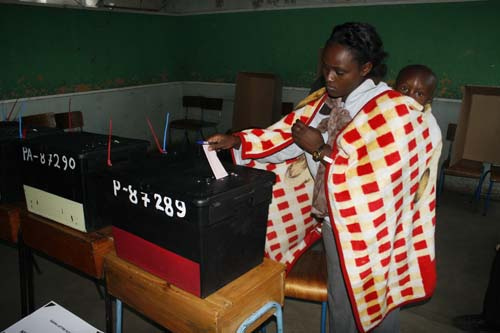
A voter casts her ballot in the 2013 Kenyan election. Photograph by Demosh
After a tense race that has divided the country along ethnic lines, Kenya can now breathe a little. On Saturday Uhuru Kenyatta was declared Kenya’s president elect. Defeating his opponent Raila Odinga by the slimmest of margins, Kenyatta’s victory avoids what would have been a divisive second round run-off vote.
Kenyatta, the countries richest man and son of its founding president, faces charges for his role in the widespread rioting that followed the 2007 elections. Kenya now becomes Africa’s second country, after Somalia, to have a sitting president indicted by the International Criminal Court (ICC) – a lamentable honour.
In other ways however, this elections outcome is more favourable. The run-up to the contest was characterised by anxiety over electoral discrepancies, vote tampering and the possibility of tribal violence. Happily, these fears seem to have been largely unfounded.
A Close Call, but the Fairest Yet?
A central worry was electoral fraud – Kenyatta achieved only 50.07% of the vote, barely scraping the 50% victory threshold required by Kenya’s constitution. Such a close call inevitably leads to accusations of vote rigging, the likes of which led to the violent outbursts of 2007.
Mr. Odinga raised complaints during ballot counting, and has refused to concede defeat. He alleges vote rigging and promises to challenge the results in the courts; but he had pledged to do so in the event of his defeat even before the votes were cast. This says more about his obstinacy than any legitimate evidence of foul play.
In spite of Odinga’s objections, many Kenyan’s consider this to have been one of fairest elections yet. Both the African Union and European Union have called the vote and counting process”fair and transparent”; so has Kenya’s reformed Independent Electoral and Boundaries Commission (IEBC), which has itself received praise for its performance. Time, and a full investigation, should shed more light on the issue, but it already seems an improvement on the widespread fraud of 2007.
Discontent, but No Violence
Kenyan elections are often fought along tribal lines, and this contest has been no different. There were worries that anything less than a decisive majority would plunge the country into a repeat of the widespread rioting which gripped the country in 2007. This time however, protests have been largely peaceful.
It may help that Kenyatta and Ruto, who 5 years ago ordered their followers to kill each other, are now on the same side. There were flare-ups in Odinga’s tribal heartlands – police used teargas to break up minor riots near Kisumu – but Mr. Odinga has appealed to his supporters to abstain from violence, and so far they seem to be complying.
The situation remains fragile but early indications reports suggest that Kenya will escape a repeat of 2007. Kenyans now have a much greater trust in the judiciary than 5 years ago – hopefully they will allow the results to be challenged through the courts, rather than on the streets.
A “Coalition of the Accused”
Despite these signs of progress, all is not well. The fact that both Kenyatta and his deputy William Ruto face charges from the ICC will complicate international diplomacy. Critics talk about a ‘coalition of the accused,’ and Western governments and donors would’ve much preferred to see Mr Odinga take the premiership.
It’s hopeful that relations with Kenya will remains good, as the country is considered a key ally in the regional battle against militant Islam; a great deal depends on whether the two cooperate with international institutions and comply with the tribunal’s demands. Even so, the prospect of a president splitting his time between running his country, and travelling to the Hague to answer criminal charges is not an attractive one.
The Waiting Game Begins
It is too soon to tell how Kenya will fare in the coming months. The most immediate test will be whether those unhappy with the outcome will put countries newly independent judiciary will be put to proper use. The outlook seems positive, but the countries economy is still in dire straits, and the effects of constitutional reforms remain to be seen. What’s more, the ICC has no care for the status of those it indicts. If either are convicted it will have serious implications for stability. Kenyans, Africa, and the world will have to watch, and wait.
Written by Tom Clarke