
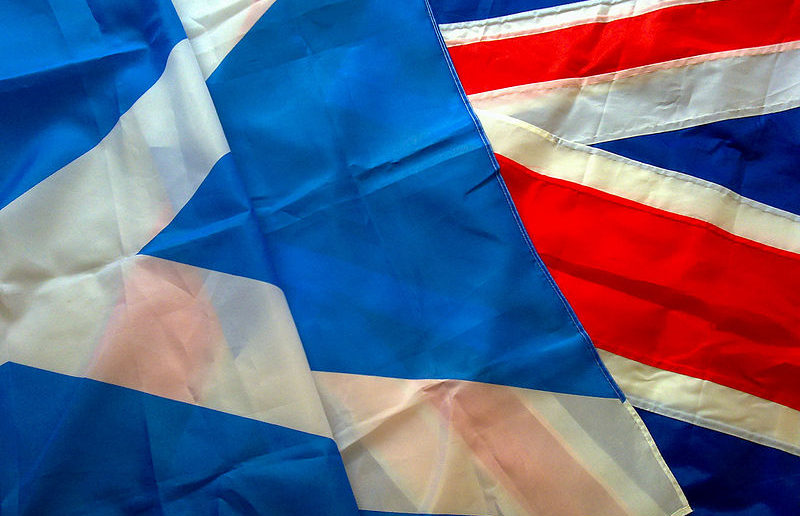
Photograph by The Laird of Oldham
Alex Salmond has launched the SNP’s blueprint for Scottish independence, a 670-page document described as a “mission statement” for Scotland’s future.
The plans are designed to make the case for independence and promise a revolution in social policy, with an economic policy designed to support Scottish businesses. The policy pledges from the SNP include free childcare, a more secure pension system, and a minimum wage pegged to the cost of living.
Launching the white paper, the Scottish First Minister said:
“It is a mission statement and a prospectus for the kind of country we should be and which this government believes we can be.
Our vision is of an independent Scotland regaining its place as an equal member of the family of nations – however, we do not seek independence as an end in itself, but rather as a means to changing Scotland for the better.”
Whilst the document does set out how Scotland would be governed post-independence and the SNP’s aims for public policy, and attacks unpopular current UK government policies such as the “bedroom tax” and privatising the NHS, it does not clearly set out how it would raise the funds to pay for its social programmes and its debts.
An independent Scotland may also get the bulk of North Sea oil revenues in the future, which would make up around 20% of the Scottish GDP, but such revenues are neither stable nor sustainable. An independent Scotland would inherit proportional debts of between £56-92 billion, which is 38-62% of Scottish GDP, and recent studies have shown that increased taxation or spending cuts would be required to balance the books.
The UK’s government Scottish Secretary Alistair Carmichael has also criticised the SNP’s plans for continuing to use the UK’s Pound Sterling as the currency in an independent Scotland, saying it was “highly unlikely” taht the UK would agree to this plan for a “currency union”. Moreover, although Scottish entry into the EU may be relatively straight forward once they reapply as an independent nation, new EU countries are currently required to take on the Euro as their currency.