
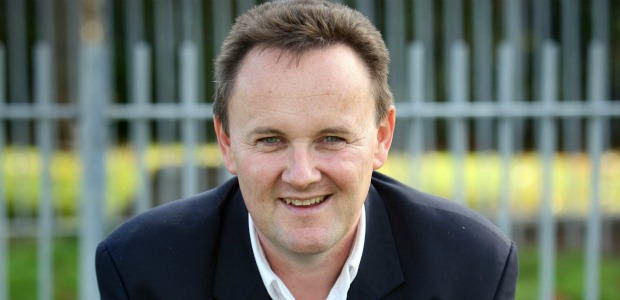
Children’s Commissioner for Wales Keith Towler
The Children’s Commissioner for Wales has backed calls for a new inquiry into the abuse of children at care homes in north Wales in the 1970s and 80s.
The news follows an investigation by the Bureau and Newsnight in which Steve Messham, one of hundreds of victims, said the Waterhouse Inquiry in 2000 into the scandal uncovered only a fraction of the abuse.
Mr Messham also told Friday’s Newsnight that he was abused at least a dozen times by a leading Thatcher-era Conservative politician.
Mr Messham was one of hundreds of children abused from the Bryn Estyn care home in north Wales.
Related article: Call for new investigation into North Wales abuse scandal
Following the broadcast of the investigation, Welsh Children’s Commissioner, Keith Towler, told BBC Radio’s 5 Live that he suspects a group of people were protected by each other’s power, enabling the abuse to continue, and he says there is need for a fresh inquiry.
Mr Towler said: ‘What is interesting, in the last 24 hours or so, is to think of the terms of references that were set by the Waterhouse Inquiry.
‘The fact that we have had someone… who was clearly the victim of appalling abuses in Bryn Estyn children’s home… who is saying that what he wanted to say was outside the terms of references – and people told him that he couldn’t say those things… is clearly wrong.’
Asked about suspicions that there had been a cover-up, he said: ‘The only way that you can clearly put that to bed is to say… that we will conduct that inquiry and we will allow that inquiry to go as far as it needs to go to make sure that the evidence that witnesses and victims want to give is fully heard.
‘Unless you do that, that level of suspicion will always be around this, that there is a cover-up, that there is a containment exercise going on, that we have to protect somebody and nobody should be protected.’
Mr Messham’s call for further investigation into the North Wales abuse case, follows the Jimmy Savile scandal, in which hundreds of alleged victims have made claims to the police following an ITV investigation which interviewed women claiming they were abused by the television presenter when they were young.
In north Wales during the 1970s and 1980s hundreds of children in almost 40 children’s homes were raped and abused by the very people who were paid to look after them.
In the early 1990s, allegations of the abuse started to surface. In March 1994 Clwyd County Council commissioned an independent inquiry into the allegations.
But the inquiry’s report was never published and the copies were pulped to ensure the local authority was able to maintain its insurance cover.
In 1996 the-then Secretary of State for Wales, William Hague, ordered an inquiry after pressure continued to mount.
A tribunal, led by Sir Ronald Waterhouse, heard allegations of abuse from more than 650 people.
The Waterhouse Inquiry identified 28 alleged perpetrators but they were never identified in public.
The Bureau’s Angus Stickler reported on the case in 2000. In the BBC investigation he interviewed some of the victims and uncovered allegations of a paedophile ring involving businessmen, police and a senior public figure, which abused the children from the care homes.
In his latest report he re-interviewed Mr Messham, who said his claims at the time had been ignored. He said he would like to see a further investigation into the scandal.
A Downing Street spokesman said: ‘Allegations of crimes should be reported to the police and fully investigated.
‘If someone is concerned that an allegation was reported in the past but not fully investigated, they should raise this with the police or relevant authority so that they can look again at what happened.’
Written by Rachel Oldroyd