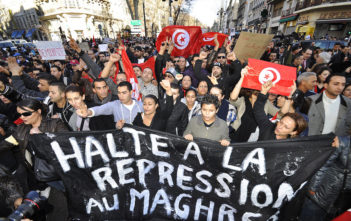
The Tunisian constitution represents both a reassuring consensus among the political elites and an important demonstration that they recognise the crucial importance of making political compromises in managing pluralist systems.
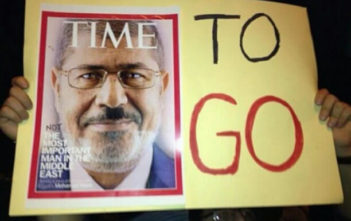
Egyptian President Mohamed Morsi has scrapped the wide ranging and controversial decree that gave him any powers to “protect the revolution” after widespread unrest and continuing protests in Tahrir Square.
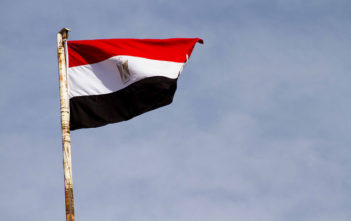
The constitution, approved in the midst of a political standoff between the president and the judiciary, provides for basic protections against arbitrary detention and torture and for some economic rights but fails to end military trials of civilians or to protect freedom of expression and religion.
Part I: State and Society Article 1 The Arab Republic of Egypt is an independent sovereign state and is united…
The draft Egyptian constitution provides for some basic political and economic rights, but falls far short of international law on women’s and children’s rights, freedom of religion and expression, and, surprisingly, torture and trafficking.