
The Organisation for the Prohibition of Chemical Weapons have adopted a detailed plan for the destruction of Syria’s chemical weapons stockpiles by mid-2014
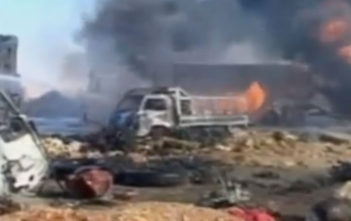

The recent use of chemical weapons in Syria and the agreement of the Syrian government to give up its chemical weapon stockpiles and production facilities have focused attention on how Syria acquired chemical weapons in the first place.
The OPCW has said that the Syrian government has completed the functional destruction of critical equipment for all of its declared chemical weapons production facilities and mixing/filling plants, rendering them inoperable.
On Monday, a suicide bomber from the Islamic State of Iraq and the Levant (ISIS) drove a car laden with 1.5 tons of explosives into a Syrian military checkpoint at the busy eastern entrance to the government-controlled city of Hama. More than 30 people died, including civilians. The audacity of the attack signalled a shift in al-Qaeda’s Syrian military tactics, and its rising confidence in an increasingly fragmented rebel state.
Foreign secretary William Hague has urged Syrian rebels not to boycott the upcoming Geneva II talks in order to find some pathway to peace in the war-torn country.