
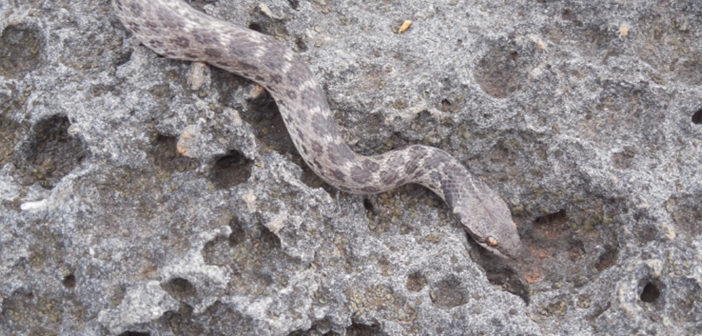
A species of snake believed to have been “lost” has been rediscovered in Mexico, says the Smithsonian Institute.
11 Clarion Nightsnakes were found on the Mexican island of Clarion by researchers from the Washington DC-based museum, 78 years since the species was last seen.
The species was never officially declared extinct, but researchers had not seen an example of the nocturnal reptilian species since it was originally discovered by William Beebe in 1936.
Daniel Mulcahy, the US National Museum of Natural History researcher who made the discovery, said:
“The rediscovery of the Clarion nightsnake is an incredible story of how scientists rely on historical data and museum collections to solve modern-day mysteries about biodiversity in the world we live in.
“Proper identification is the first step toward conserving this snake, and we plan to continue monitoring this species to learn more about the role it plays in the delicate Clarion Island ecosystem.”
The Clarion nightsnake lives exclusively on the black lava rock habitat near the waters of Sulphur Bay on Clarion island in the Pacific, and can grow up to 45cm long. The snakes are brownish black in colour and have a characteristic series of darker spots on their head and neck, according to the Smithsonian Institute.
Although never declared extinct, it was struck from the record after scientists were unable to rediscover it.
The museum said that researcher Daniel Mulcahy, working with an expert from a Mexican institute, carried out an expedition to Clarion Island where their team identified 11 snakes matching Beebe’s description.
DNA tests confirmed that the Clarion Nightsnake was indeed genetically distinct from others found in mainland Mexico.
The museum said the snake species is found exclusively on the island and could have remained unknown to science if not for the team’s efforts. It is now recognised as a full species.
“The rediscovery of the Clarion Nightsnake is an incredible story of how scientists rely on historical data and museum collections to solve modern-day mysteries about biodiversity in the world we live in,” Mr Mulcahy said in a museum statement.
“Proper identification is the first step toward conserving this snake, and we plan to continue monitoring this species to learn more about the role it plays in the delicate Clarion Island ecosystem.”