
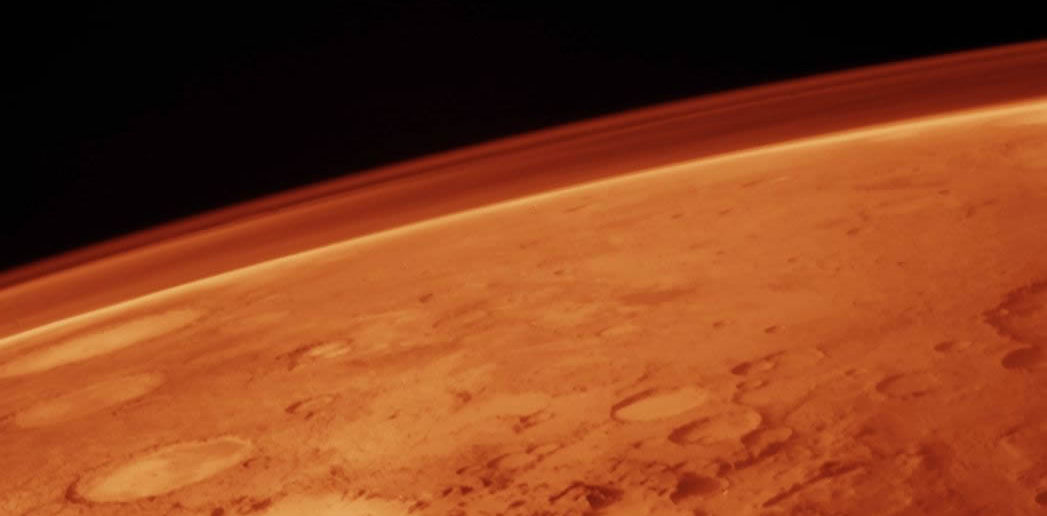
Mars may have had liquid water within the last 200,000 years, according to a new study published in the journal Icarus.
There is a crater in the mid-latitudes of the red planet’s southern hemisphere that contains “very well-preserved gullies and debris flow deposits”, which the researchers believe provide evidence that Mars has liquid water within geologically recent history.
Debris flow deposits are caused when water saturates the sediment on a slope to the extent that it becomes to heavy to stay in place, and the mixture slips down the slope.
To confirm their interpretations of how the landforms were created, the scientists were able to compare them with the known debris flows on the Norwegian Arctic Ocean archipelago of Svalbard. They were surprised that the debris flows found on Mars were so young.
Lead author Andreas Johnsson of the Department of Earth Sciences, University of Gothenburg, said:
Gullies are common on Mars, but the ones which have been studied previously are older, and the sediments where they have formed are associated with the most recent ice age. Our study crater on Mars is far too young to have been influenced by the conditions that were prevalent then. This suggests that the meltwater-related processes that formed these deposits have been exceptionally effective also in more recent times.