
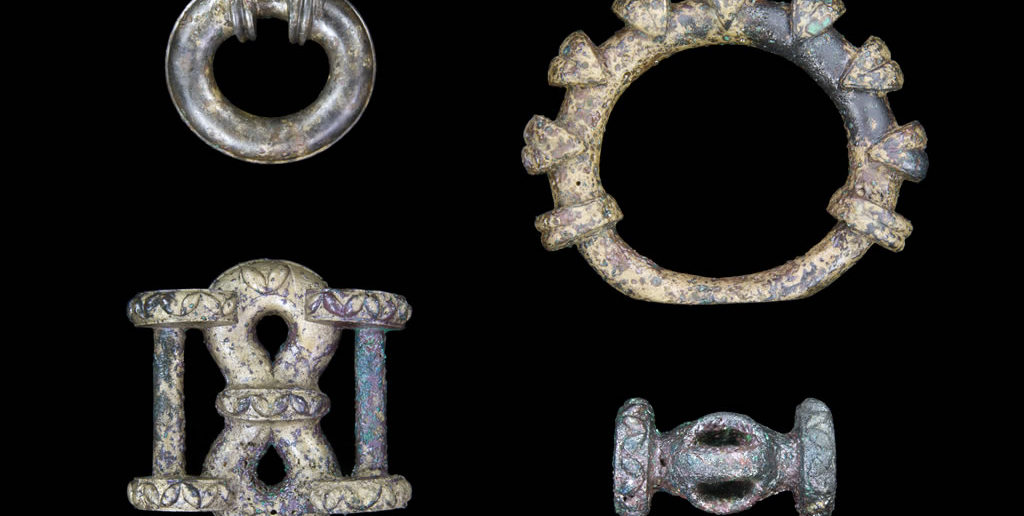
Archaeologists from the University of Leicester have uncovered the remains of an “extremely rare” Iron Age chariot during an excavation at the Burrough Hill Iron Age hillfort.
The team from the University’s School of Archaeology and Ancient History unearthed a hoard of bronze fittings of a chariot from a 200-300 BC while digging a large, deep pit near the remains of a house within the hillfort.
After careful cleaning, decorative patterns became clearly visible in the 2,200-year-old metalwork, such as a triskele motif showing three waving lines, similar to the flag of the Isle of Man.
The chariot is believed to have been owned by a high status individual, such as a noble or warrior, but was dismantled and and the fittings burned in a box as part of a religious offering.
Nora Battermann, one of the students who made the discovery, said:
“Realising that I was actually uncovering a hoard that was carefully placed there hundreds of years ago made it the find of a lifetime. Looking at the objects now they have been cleaned makes me even more proud, and I can’t wait for them to go on display.”
Dr Jeremy Taylor, Lecturer in Landscape Archaeology and co-director of the Burrough Hill field project, said:
“This is a matching set of highly-decorated bronze fittings from an Iron Age chariot – probably from the 2nd or 3rd century BC.
“This is the most remarkable discovery of material we made at Burrough Hill in the five years we worked on the site. This is a very rare discovery, and a strong sign of the prestige of the site.”
The parts have been taken to the University of Leicester’s School of Archaeology and Ancient History for further analysis, and the archaeologists hope they will be put on public display in due course.