

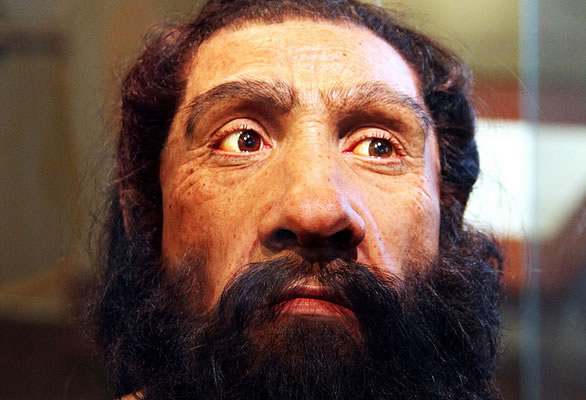

Reconstruction of a Neanderthal man by John Gurche. Photograph by Tim Evanson
Scientists have managed to extract human DNA from bone fragments that has been found to be 400,000 years old, confusing what we thought we knew about our historical ancestors.
Researchers discovered the bone fragments in the Sima de los Huesos cave in Spain and found that the DNA had less genetic similarity with European Neanderthals than with Denisovans, a human species previously believed to have lived exclusively in Siberia according to National Geographic.
Published in the journal Nature on Wednesday, Matthias Meyer of Max Planck Institute called the discovery of DNA similar to that of Denisovans as “irritating”, as it shows that the evolution of Neanderthals and Denisovans may be much more complicated and intertwined than previously thought.
The DNA is 300,000 years older than the previous record for the oldest discovered human DNA, and was preserved because of the cave’s stable temperatures.



2 Comments
Is
there evolution if there is no time? How will evolutionary biology meet new
physical paradigms about time, space and so on? Will new conceptual changes
deny evolution? Or on the contrary, will it become a more extraordinary
process, full of astonishing implications? Will human being nature become
different as science progresses? Can knowledge change human beings, can it
change you? Along these lines, a serious-funny b-book recommendation, a preview
in goo.gl/rfVqw6 Just another suggestion
Is there evolution if there is no time? How will evolutionary biology meet new physical paradigms about time, space and so on? Will new conceptual changes deny evolution? Or on the contrary, will it become a more extraordinary process, full of astonishing implications? Will human being nature become different as science progresses? Can knowledge change human beings, can it change you? Along these lines, a serious-funny b-book recommendation, a preview in http://goo.gl/rfVqw6 Just another suggestion