
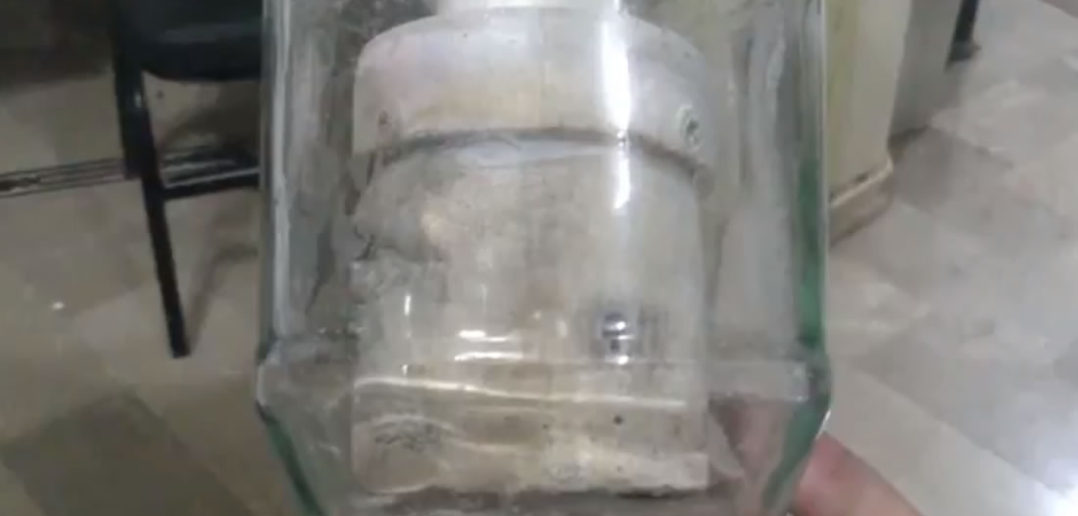

Still from a YouTube video by Brown Moses reportedly showing a chemical weapon canister used in Syria
Yesterday, news outlets around the world carried the claims of UN investigator Carla Del Ponte that the Syrian rebels had used the nerve-agent sarin for a chemical attack on Assad supporters. However, within hours the UN Commission of Inquiry on Syria sought to distance themselves from her comments, and downplay the claims. So what do we really know about the use of chemical weapons in the ongoing Syrian civil war?
There is little doubt that the Assad regime had stockpiles of various chemical weapons, including sarin gas, before the outbreak of the conflict, and Syria is one of the eight countries in the world, along with neighbours Egypt and Israel, that did not sign up to the Chemical Weapons Convention in 1993. When warnings first came from the US and Israel about possible intervention if the “red line” of using chemical weapons in the conflict, however, President Assad was quick to assure the world that he would not use chemical weapons against the “Syrian people”. The language of these statements were carefully constructed, and as fighting has intensified, the Assad regime has blamed the majority of the fighting on “foreign terrorists”, which could leave them excluded from the “Syrian people” that Assad promised never to attack with chemical weapons.
There have been various claims of the usage of chemical weapons by both sides of the conflict, but crucially the Assad regime continues to block access to many of these sites to outside observers including the UN, so any information that does filter out is patchy at best, and actively filtered at worst. An alleged chemical attack in the pro-Assad Khan al-Asal area of Aleppo was one of the few locations of alleged chemical attacks that the regime have welcomed outside observers, and a report from the Syrian state broadcaster SANA following Del Ponte’s statement implies that this is the attack that Del Ponte may have been referring to in her comments.
As the news of this attack spread last March, EAWorldView commented that it was difficult to ascertain who launched the attack or even how, but they are clear to point out that:
Whatever the circumstances, it does appear that pro-Assad forces and supporters were affected by this attack
It is certainly possible that rebels have taken control of some of the chemical weapons stockpiles built up by Assad during the more than two years of fighting, and some groups fighting Assad such as Jabhat al-Nusra do not shy away from causing civilian casualties, and could have used such weapons if in the control. However, with only eye-witness testimony and information on how the resultant injuries were treated, it is near impossible to ascertain who fired the nerve-agent containing missile. That the injuries were inflicted on Assad supporters does imply it could have been launched by the rebels, but the possibility that it was a faulty missile from the Syrian military that missed its target is impossible to rule out. As no group claimed responsibility, and each side blaming the other for the attack, evidence is lacking for any definitive answers.
It appears that Del Ponte’s claims “strong concrete suspicions” were a surprise to the UN investigation of which she is a part, an organisation which has since made clear that they had “not reached conclusive findings” as to their use by any parties”. In live situations such as the Syrian conflict it is important that outside onlookers and investigators only present the facts, and Del Ponte is reported to have a history of hitting the headlines from making statements outside her official capacity as an investigator, possibly to the detriment of the investigations and their prosecution.
Certain rebel groups may well have used chemical weapons in Syria, as may the Assad regime, but their use has been made out to be a “red line” by the US amongst other actors and may define any outside intervention in the conflict. It is therefore important that any accusations should be based on factual evidence, and speculation should not be coming from individuals within UN.