
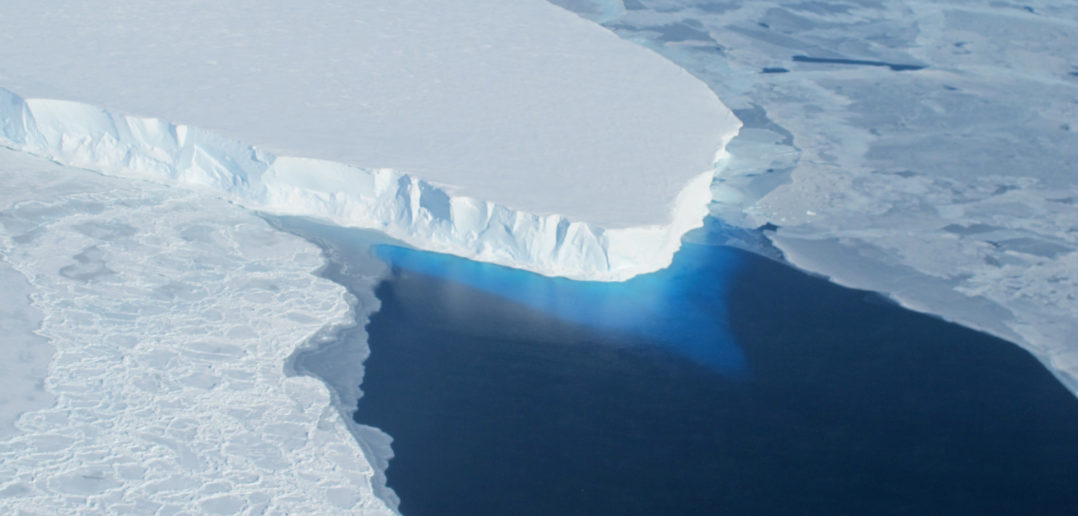
The glacier loss in the West Antarctic appears “unstoppable”, with nothing to prevent sections of the ice sheet melting completely into the sea, according to a new study by researchers at NASA and the University of California, Irvine.
Multiple lines of evidence, including 40 years of observations, indicate that the glaciers in the Amundsen Sea sector of West Antarctica “have passed the point of no return”, according to glaciologist and lead author Eric Rignot, of UC Irvine and NASA’s Jet Propulsion Laboratory.
The glaciers contain enough ice to raise global sea levels by around 1.2m, and are melting more quickly than scientists had originally predicted.
The team used radar observations captured between 1992 and 2011 by the European Earth Remote Sensing (ERS-1 and ERS-2) to monitor how the glaciers have accelerated towards the sea, which increases the melting and thinning of the ice, which further accelerates the movement.
Rignot said:
“The collapse of this sector of West Antarctica appears to be unstoppable. The fact that the retreat is happening simultaneously over a large sector suggests it was triggered by a common cause, such as an increase in the amount of ocean heat beneath the floating sections of the glaciers. At this point, the end of this sector appears to be inevitable.”
The study has been accepted for publication in the journal Geophysical Research Letters.