
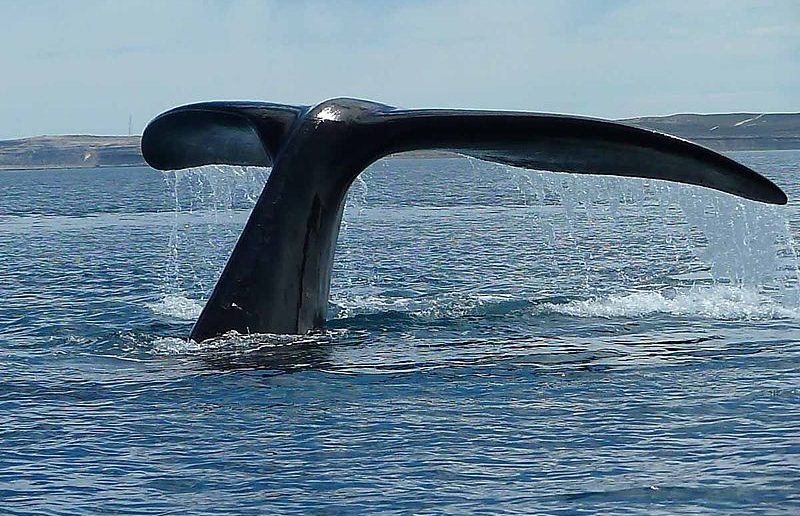
Photograph by Edith Schreurs
Scientists have finally managed to explain the mystery of an ancient whale graveyard discoveredin the Atacama Desert, Chile in 2010.
In a report published in Proceedings of the Royal Society B, researchers from the Smithsonian National Museum of Natural History and the Universidad de Chile in Santiago documented the skeletons of 40 rorqual whales, sperm whales, seals, aquatic sloths, walrus-whales and predatory bony fish at the Cerro Ballena site.
The scientists found the the bones, which date from between six and nine million years ago, were the result of repeated mass strandings of marine animals at the same site, suggesting that they were the result of a similar cause.
Their orientation and condition suggested that the animals died at sea, with the researchers theorising that their deaths could have been the result of harmful algal blooms (HABs). These HABs are still one of the most common causes of mass strandings today as the toxins they produce cause organ failure in marine animals, but direct evidence for their antiquity has been lacking.
Nicholas Pyenson, paleontologist at the Smithsonian’s National Museum of Natural History and lead author of the research said:
“Harmful algal blooms in the modern world can strike a variety of marine mammals and large predatory fish. The key for us was its repetitive nature at Cerro Ballena: no other plausible explanation in the modern world would be recurring, except for toxic algae, which can recur if the conditions are right.”