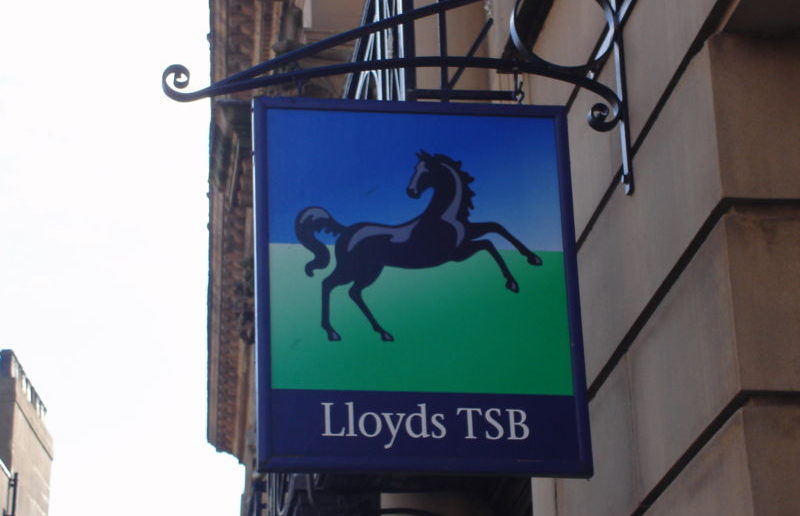
Photograph by Sean Whitton
Lloyds Banking Group, which is part-owned by the UK government, posted a profit of £2.1 billion in the first six months of 2013.
The bank made a loss of £456 million in the same period last year.
The bank said it had strengthened its balance sheet and increased its lending by 1% (£3 billion), and it will discuss with regulators about resuming paying out a dividend to its shareholders. Bad debts at Lloyds also fell 43% to 1.8 billion, although the bank did need to make a further £450 million charge to its accounts for mis-selling payment protection insurance (PPI).
Its share price rose 8% on the news in the first few hours of trading.
The resumption of paying a dividend to shareholders would be the first step along a path for the government to sell its 39% (£19 billion) stake in the corporation.
Chancellor George Osborne has said that he would start to sell the government’s stake in the company once the shares reached 61p per share, a break-even price for the government, although many have argued that this would not be a good return on investment for the British taxpayer. The stock is currently trading at around 10p above this price.
After a deal to sell off a number of high street branches to the Co-operative Banking Group fell through in April, Lloyds now intends to rebrand 631 branches across the UK as TSB Bank from the 9th September, before selling off the TSB business.
Lloyds has also continued its international cost-cutting programme, having now exited 17 countries, with a plan to only operate in 10 countries with a focus on its core UK operations in the future.