
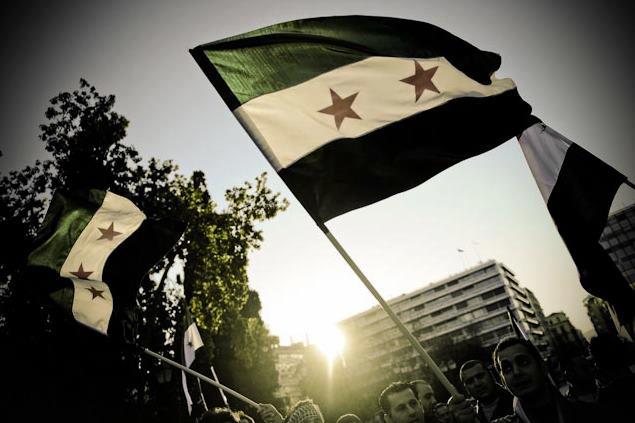
Photograph courtesy of Syria Revolution in Photos
The civil war in Syria has been going more than two years, with more than 70,000 people losing their lives, but up until recently it has remained a localised conflict within the Syrian borders.
A number of local powers have aided the rebels in their uprising against Assad, with funds and weapons reported to be coming through Turkey from Saudi Arabia and Qatar amongst others. In return, Iran and Russia have been supplying the Assad regime with arms on a much larger scale, with the conflict becoming a stalemate for the last few months with neither side gaining much ground or control.
The two local actors which could cause the conflict to spill over outside the Syrian borders and engulf parts of the Middle East are Israel and the Iranian-backed radical Lebanese Shia group Hezbollah. Hezbollah have long been an enemy of Israel, with their formation in the heat of battle in the 1982 Israel-Lebanon War, and Israel fears that their involvement in the Syrian conflict could result in them gaining more advanced weapons from Assad’s military such as access to the s-300 mobile anti-aircraft defence systems currently being shipped from Russia. Israel could not defeat Hezbollah in 2006 when they were notably outgunned, and any more advanced weapons could make them a real threat to Israel’s powerful position in the region.
Hezbollah fighters have been flowing across the Syrian border for months and they are fighting alongside Assad’s military and in many places taking heavy heavy casualties, such as in the battle for Qusair. Rebel activists claim that more than 7,000 Hezbollah fighters are already in Syria.
Israel is sufficiently concerned about Hezbollah involvement in the conflict, and advanced weapons systems reaching their hands, that they have on occasion launched targeted airstrikes on arms shipments reportedly on way to Hezbollah fighters within Syria. Now with the s-300 anti-aircraft systems reportedly being shipped from Russia, Israel is being forced to either act now and target those arms whilst in transit, or face the possibility that they could no longer interfere with such matters in the future.
These weapons could also preclude the possibility of other international powers such as the US or UK setting up no-fly zones in the country to protect civilians in rebel-held areas, making them a real “game changer” in possible future direction of the conflict. Their importance means that Assad has warned Israel that any further strikes on targets within the Syrian borders, such as aimed at these weapons, would result in direct retaliation from Syria, essentially starting a war between the two neighbouring countries.
If Israel is drawn into a war against Assad, Hezbollah would likely react by starting hostilities against the country from Hezbollah strongholds within southern Lebanon, and could escalate into another conflict between Israel and Lebanon, drawing another neighbour into the conflict.
The UN Human Rights Council condemned the actions of foreign fighters in Syria, and the US have warned Hezbollah to leave Syria, but they have not threatened any consequences for non-compliance.
The Syrian conflict is at a turning point with possible negotiations proposed between the government and the rebel Syrian National Council (SNC) at “Geneva 2”. The Syrian government has said that they would attend “in principle” to such negotiations without preconditions, whilst the SNC have in general welcomed the negotiations, but reiterating their demand that Assad must step down along with leading military and intelligence figures before any negotiations could take place.