
How do you solve a problem like Margaret? It clocks in at an epic two-and-a-half hour running time of soul-searching drama, features an extremely self-absorbed teen protagonist, observes a bunch of dysfunctional people at odds with the society they live in, gives no easy answers and lobs a dialogue-free, operatic finale that delivers no happy, tidy closure but only heartbreak and devastation. It also deals with loss, sorrow, grief, guilt, regret – a cinematic treatise almost as bleak as an Ingmar Bergman film. You can almost visualise the furrowed brows and acerbic faces of Fox Searchlight studio executives, who deemed Kenneth Lonergan’s behemoth drama as ‘unmarketable’. This is 21st century Hollywood we’re taking about. Moral complexity spells ‘flop’. It’s no wonder Margaret suffered botches in the editing suite, studio vs. director battles and legal furore, and even bringing in Martin Scorcese and Thelma Schoolmaker to finalise a 150-minute cut from Lonergan’s original 3-hour version. It’s been six long years since Lonergan mounted his camera, and since then Anna Paquin has entered adulthood, got married and moved on to television, cavorting with vampires in HBO’s True Blood.
What was deemed to be ‘unprofitable’ by studio execs and thought as an overwrought, over-long chin-brushing artistic folly turned out to be a beautifully, complexly drawn social drama bursting with vivid, authentic characters. Where the studio faced low box-office returns, those very few who have seen this upon its limited initial release (it opened in London’s Odeon Panton Street, the only cinema across Britain billing Margaret) have very much profited morally, psychologically and emotionally. Lonergan’s singular film is an epitome of anti-commercialism, a work of art that doesn’t capitalise on bang-for-your-bucks syndrome but rather on human truths and the complexities of human lives. Lonergan’s approach is tactfully observational, allowing the events and scenes play out with some raw, spiky, unvarnished emotions as if it’s Cassavetes behind the camera, added with a free-falling drama that plunges the main heroine into a moral odyssey into a variety of characters vignettes that somehow reflects the film’s main thrust.
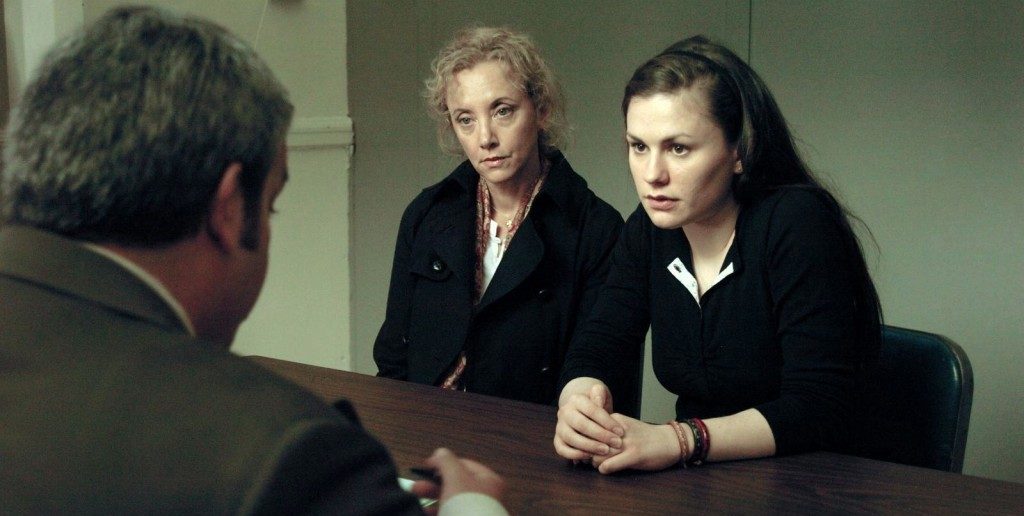
“We are all disconnected,” Paquin’s tormented teen Lisa growls both with despair and disappointment in front of her world-weary stage actress mother (played to supreme gravitas by J. Smith-Cameron). For a film about social disenchantment and moral bankruptcy, Margaret delivers in spades the foibles of the fragmented lives affected by the central accident, the deux ex machina that kickstarts Lisa’s guilt-ridden journey into self-responsibility and blame. And there’s absolutely no other actor of her range who can portray Lisa better than Anna Paquin – so spectacular in the central role you’d be forgiven to think it must be one of the greatest performances of the last decade, reminding us of that 11-year old girl who won an Oscar for The Piano. Ferocious yet vulnerable, exasperating yet sympathetic, unbridled yet very much a teenager thrown into an inescapable moral dilemma – the responsibility of the death of another human being. She is a metaphor for America as a nation psychologically in denial of its own actions. This is perhaps one of the finest films to come out of American soil dealing with post-9/11 trauma.
VERDICT:
Margaret, for all its mercurial flaws, is a gloriously artistic, mature, emotionally harrowing film about human guilt and modern-life disjointedness. Lonergan creates this empathic and profound cinematic experience, sprawling with authentic characters and anchored by Anna Paquin’s dynamo, powerhouse of a performance. One of the masterpieces of the past few years? Only time will tell.
★★★★★★★★★★ (10/10)