
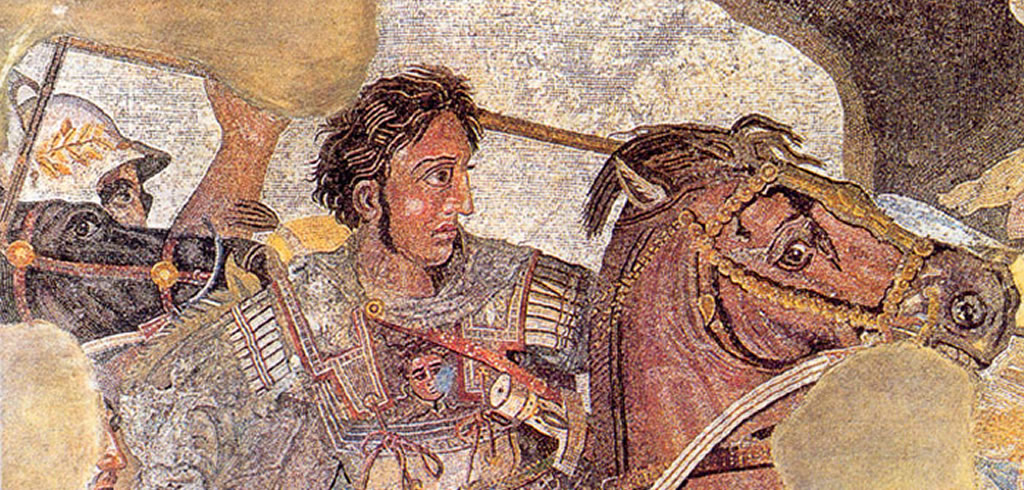
Archaeologists in the Macedonia region of northern Greece have uncovered a funeral mound that dates back from the time of Alexander the Great (356-323 BC) and is believed to be the largest ever discovered in Greece.
The site was hidden under a hill at the ancient town of Amphipolis, built on the banks of the river Strymon, and is nearly circular in shape with a marble outer wall measuring 147m.
A five metre tall marble lion is believed to have stood atop of the mound, with a person of significance laid to rest within, but after two years of research, the archaeologists remain uncertain as to who is buried at the site.
Alexander died in Babylon in modern-day Iraq and was finally laid to rest in Alexandria, but the researchers theorise that the Amphipolis burial mound may be that of another member of the royal family.
One theory is that it is the burial place of Alexander’s wife, Roxana, and son, who were killed in 311 BC by Cassander, a Macedonian general who fought over Alexander the Great’s empire after his death, but the archaeologists hope to have determined who is buried there conclusively in the coming weeks.