
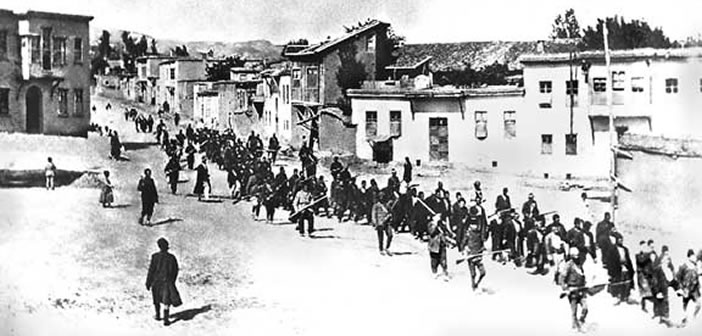
The German parliament has approved a resolution declaring the mass killing of hundreds of thousands of Armenians by Ottoman Turks in 1915 a “genocide”.
Turkey continues to deny that there was a systematic campaign to slaughter Christian Armenians as an ethnic group during WWI, and has warned Germany that the resolution could damage diplomatic relations between the two countries.
Turkish President Recep Tayyip Erdogan phoned German Chancellor Angela Merkel to tell her that ties would suffer “if (Germany) falls into such a game” at a time when the European Union is depending on its help with the ongoing migrant crisis.
There was overwhelming cross-party support for the Bundestag (lower house) resolution, which uses the word “genocide” to describe the mass killings, and goes on to say that as a Turkish ally at the time, Germany accepts some guilt for doing nothing to stop the killings.
Germany is the latest country to recognise the Turkish actions as genocide, following France, Russia, and more than a dozen other countries.
Historians estimate that between 800,000 and 1.5 million Armenians dies as a result of what Armenians call “Medz Yeghern” (the “Great Crime”). The deaths were the result of two actions by the Ottoman Turks during the First World War – the execution of the able-bodied male population and then the forced deportation of women, children, and the elderly and inform along “death marches” to the Syrian desert.