
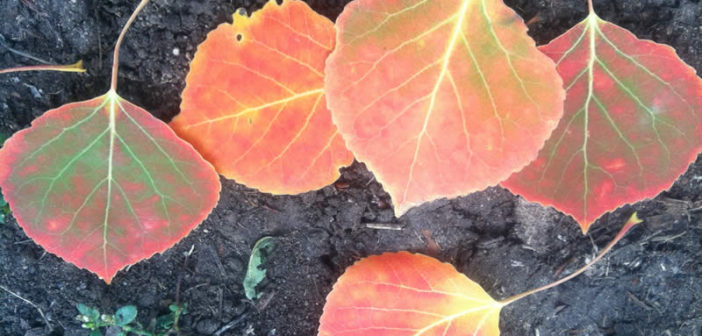

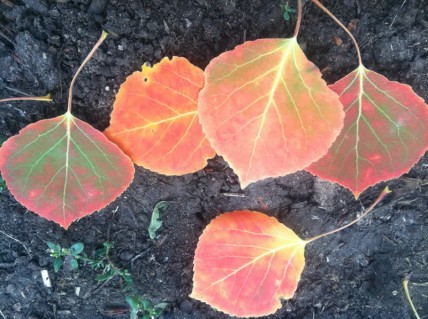
Autumn leaves. Photograph by Christie Aschwanden
Autumn. It’s perhaps my favorite time of year. Ski season is just around the corner and the tomatoes in the garden have reached their peak. A few late peaches remain, and our pears and apples are perfectly ripening. The sun’s angle in the sky intensifies the light and makes the landscape appear especially vivid and colorful. The evening air feels crisp and cool, and I find myself looking forward to the morning when I’ll build the season’s first fire in the wood stove.
Almost two weeks of summer remain as I write this, but like everything else this year, it seems that autumn has arrived early. Temperatures remain plenty warm, but out hiking at the beginning of this month, I spotted the year’s first yellow and orange aspen leaves. Colorado’s fall colors have arrived weeks earlier than usual, and the forecast calls for snow in the high country.
Scientists blame the drought for the early colors. Prolonged dry weather can force our aspens and shrub oaks into an early dormancy, but the upshot is that a dry autumn may increase the length of the fall color display.
Some natural phenomena give time a certain rhythm and predictability. I know that the sun will rise each morning in the east, and set sometime later on the western horizon.
Less certain though, is the timing of the first yellow aspens, the frost that marks the end of the summer garden and the season’s first snow. As a skier, I eagerly await each winter with the hope that it will bring ample powder to the ski trails. Most of the eight years that I’ve lived here, we’ve had enough snow on the Grand Mesa to cross-country ski by Halloween, and I generally consider the Halloween ski outing a benchmark for normal.
And yet I wonder what “normal” really means. My lifespan is minuscule in the scheme of the earth’s history. The climate was once different here and it’s changing again, aided by humans and our penchant for spewing greenhouse gasses. As I look forward to winter, I wonder how this one will compare to the last. Will last winter’s scarcity of moisture continue into this one? Are we facing a prolonged drought, or will the snow pile high like it did a few seasons ago?
It’s tempting to think that the weather patterns we’ve experienced are the ones that will continue indefinitely, but it’s human folly to expect that nothing will ever change — especially when our actions are altering the climate.
I recently read an interview with a ski racer who was training on slushy snow in the southern hemisphere’s warm spring. He welcomed the opportunity. Powder snow is no longer the norm, he said. These days, most races take place on freeze-thaw ice or slush.
Looking out my office window, I watch the aspen trees turn from green to yellow and orange, and wistfully cling to fond memories of previous winters, hoping that the coming season will be filled with the light, powdery snow of my fondest winters past.