
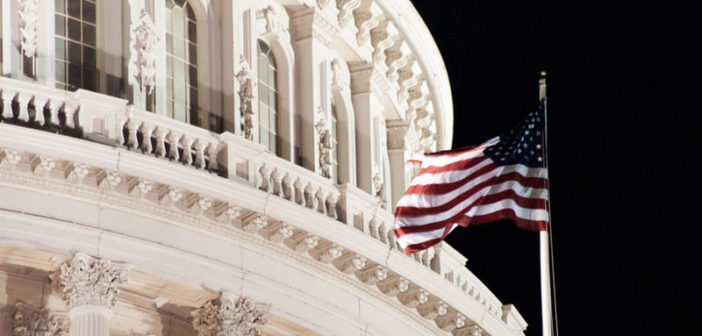


Photograph by Florian Hirzinger
It is a strange quirk of the US parliamentary system that allows for government shutdowns affecting around 700,000 workers in the US and capital markets around the globe, and a quirk with such major effects that it has left many around the world confused.
The system may have been designed with compromise in mind with each branch of government possibly under the control of different political parties, but in recent years that has just resulted in creating impasse. Using budget negotiations to extort the current government has been a negotiating tactic for decades with 17 previous government shutdowns, but for a country that has always focused on growing its economy, the shutdowns have a staggering effect on slowing growth.
It is not just that such shutdowns would not happen in other democracies around the world, but that their systems of government would prevent such events occurring. In Europe, most countries have the executive and legislature branches of government controlled by the same party, and whilst they could refuse to pass a prime minister’s budget, that would then trigger a vote of no confidence and national elections – all whilst the government continues to pay its workers and its bills. And in non-parliamentary democracies like Brazil, the executive branch has overriding power to keep the functions of government working and its employees paid during a game of high stakes budget negotiation.
Australia has many similarities with the US as a “frontier nation” and they had a government shutdown once in 1975 over a budgetary squabble. However, rather than workers and bills going unpaid the British monarch, Queen Elizabeth II, simply dismissed parliament and new elections were called. It is a quirk of Australia being a former colony of Britain that still maintains the Queen as its head of state that allowed then Governor General Sir John Kerr to take these actions under the power of the Queen, but this is a get-out clause so useful that Max Fisher in the Washington Post quipped that Britain might take America back to fix its political system.
The politicians continue to be paid in Washington during a government shutdown whilst everyone else suffers non-paid leave with no guarantee of back-pay. And it is this uncertainty that has an effect on markets both within the US and abroad. Globalisation means that the economies of every country is connected, so whilst the budget squabbles in Washington should be an internal matter, its effects will be felt across the globe – especially in neighbouring Canada and Mexico, and the US’ major trading partners such as in the UK an Europe.