
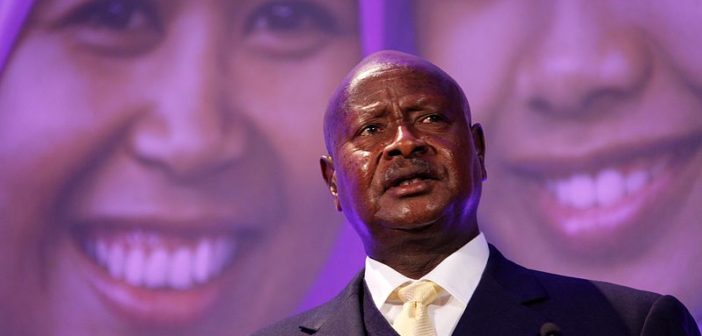


President Yoweri Museveni of Uganda. Photograph by DFID
President Yoweri Museveni of Uganda has signed into law the country’s controversial anti-gay law that increases penalties for those found to be homosexual.
Gay sex and gay marriage carry a life sentence under the new law, and “promoting homosexuality”, where activists support and encourage gay people to come out, has also been criminalised.
Some of the more extreme measures originally proposed, such as the death penalty for homosexuality and making it illegal for friends and families of gay people to not report them to the authorities, were removed after the UK and other European nation threatened to withdraw aid to the African country.
Museveni had previously said that he would not sign the bill, describing gay people as “sick” and in need of treatment rather than imprisonment, but since changed his mind because he claimed that scientists had found no gene for homosexuality and that it was choice that could be “unlearned”.
Displaying his regret in Museveni’s signing of the bill, British Foreign Secretary said:
I am deeply saddened and disappointed that the Anti-Homosexuality Bill in Uganda has been signed into law. The UK strongly opposes all discrimination on any grounds. We question the Bill’s compatibility with Uganda’s constitution and international treaty obligations. There can be no doubt that this Bill will increase persecution and discrimination of Ugandans, as well as damage Uganda’s reputation internationally.
We ask the Government of Uganda to protect all its citizens and encourage tolerance, equality and respect. We will continue to press the Government of Uganda to defend human rights for all, without discrimination on any grounds.