
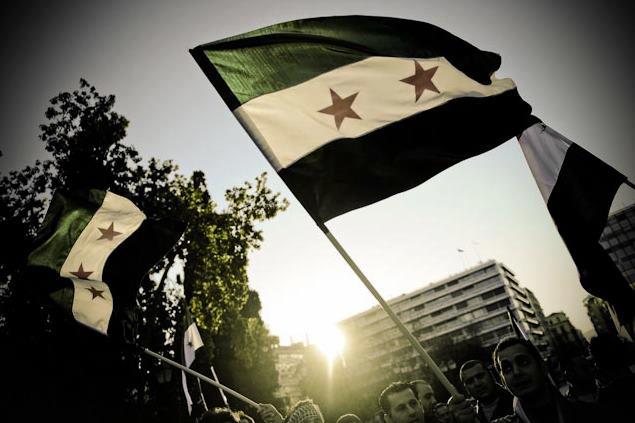
The Syria peace talks in Geneva have opened with bitter accusations from each side over the ongoing conflict which has cost more than 100,000 lives.
UN Secretary General Ban Ki-moon has urged delegates to engage “seriously and constructively” in discussions and try to find some middle ground, but both sides are entrenched in their positions.

Photograph courtesy of Syria Revolution in Photos
The parties are discussing the Geneva communique, which lays out a political roadmap for Syria to end the bloodshed, but neither side can agree on the future of current Syrian President Bashar al-Assad.
Ministers from 40 countries will speak at the talk before the face-to-face meetings between the Syrian government and the Syrian National Coalition (SNC) begin on Friday, the first time the two sides will have met since the conflict began in 2011.
Syria’s Foreign Minister Walid Muallem accused some states involved in the peace talks of having “Syrian blood on their hands”, blaming international actors for their role in supporting the rebels and prolonging the conflict.
Ahmad Jarba of the SNC blamed the regime for forcing the opposition to take up arms after the brutal way that they had suppressed the peaceful protests in 2011, which sparked the conflict. He showed the attendees a photograph from the recently released investigation into war crimes by the regime which showed systemic torture and execution of opposition prisoners, and called on the Syrian government to immediately sign the geneva document and transfer power to a transitional authority to end the bloodshed.
Russian Foreign Minister Sergei Lavro reiterated his call for Iran to be involved in the discussions as a major ally of the Assad regime, and said their was a “historic responsibility” on the shoulders of those involved in the talks to find a peaceful solution to the Syrian conflict.
US Secretary of State John Kerry said that it was the actions of the Syrian regime in putting down 2011’s peaceful protests that led to the conflict and made clear that he believed that there was “no possible way” for Syria to find peace as long as Assad remains in power.