
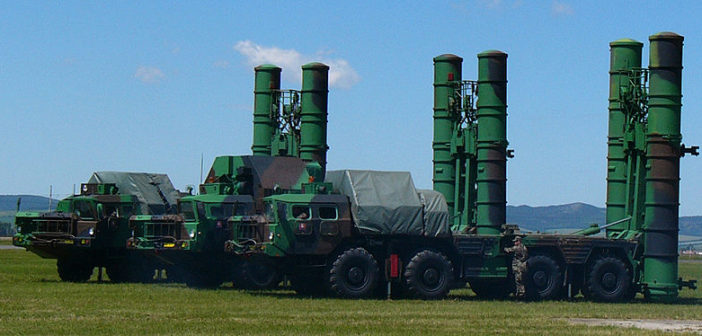

S-300 mobile missile defence system. Photograph by EllsworthSK
Syrian President Bashar al-Assad has claimed that the Syrian army has won “major victories” against the rebels and holds the “balance of power” in an interview with a Lebanese television station.
Assad is also quoted as saying that Syria has received its first shipments of an advanced air defence system from Russia, believed to include s-300 missiles in the interview with Hezbollah-linked Al Manar TV which is due to be broadcast later today.
Russia pledged to go ahead with the arms shipment to Syria, ignoring US and European lobbying, after the EU agreed to lift the arms embargo preventing member states from supplying weapons to the rebels, something Russia called a threat to future peace. These international escalations have caused many to fear the possibility of an arms race in Syria, which would result in even greater numbers of civilian deaths.
Whilst the Russian decision may not have been a direct result of the lifting of the EU arms embargo, Israeli officials have blamed the EU in being at least a major factor. Israel is planning to act against these shipments of Russian-made S-300 missiles before the Syrian army have put them into service, as they could prevent Israel from destroying any shipments ending up in the hands of Hezbollah. It would also be much more difficult for foreign forces to set up a no-fly zone within Syria to protect civilian populations if these defence systems are fully functional.
Speaking on Russia decision to ship these missile to Syria, a British Foreign Office spokesman said:
This is an unhelpful decision by the Russians – supplying to a regime that has shown itself to be incapable of using its weapons systems proportionately or discriminately eg use of Scud missiles against own cities.
The focus now needs to move to energising the political track including through preparing for the ‘Geneva II Conference’. We will be working closely with our partners and Russia to give it the best chance of making progress.
Regional power Iran has been supplying the Syrian regime with weapons and ammunition for much of the conflict, with Brown Moses recently uncovering further video evidence of such shipments, which are in violation of UN sanctions against Iran. Saudi Arabia and Qatar are believed to have been supplying the rebels with weapons for the last year or more, with much of these shipments being delivered to Islamist groups such as Jabhat al-Nusra, changing the balance of power against Assad in many areas from the non-secular FSA to more radical Sunni groups. The UK and FRance are looking to redress this balance in the rebel groups, by supplying more advanced weapons to non-Islamist groups.