
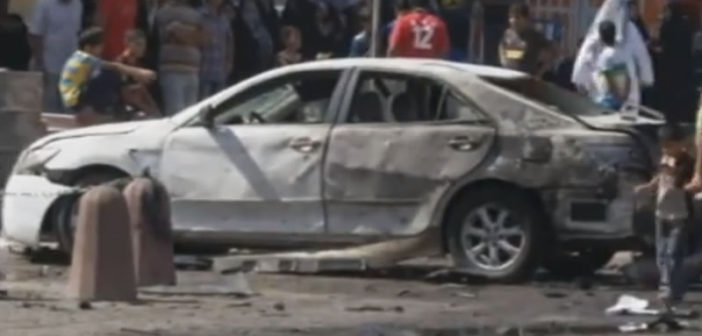

12 bombs have exploded across the Iraqi capital of Baghdad over the last two days, killing at least 82 people and leaving scores more injured.
The wave of attacks began on Sunday, targeting majority Shia Muslim districts in the city, with one bomb detonated during a funeral at a mosque in Mussayab killing at least 40 civilians according to Reuters
On Monday, the wave of bomb attacks continued against Shia Muslims, with bombs detonated during the morning rush hour to cause the greatest number of casualties, with a particularly deadly attack at a vegetable market at Sadr City.
Kurds have also been targeted in this surge of attacks, but the BBC reports that Irbil, the capital of the autonomous region of Kurdistan was struck by a wave of explosions which killed six members of the security services.
No group has yet claimed responsibility for the attacks, but they are widely being blamed on Sunni Muslim extremists.
The recent surge in sectarian violence in Iraq has sparked fears that we are seeing the start of another wave of bloodletting, as happened in 2008 where nearly 7,000 civilians died from such attacks. There have been more than 4,000 deaths from such attacks so far in 2013.
Whilst the sectarian violence has never left Iraq since the US-led invasion, the numbers of civilians killed had generally been declining since 2008. This surge may be a result of the ongoing civil war in neighbouring Syria becoming increasingly sectarian, and the violence spilling over the borders.
Irbil, the normally stable capital of Iraq’s autonomous province of Kurdistan, was hit by a series of bombings on the same day, killing six members of the security services. Officials said that violence could be linked to fighting between jihadists and Kurds in Syria.
More than 4,500 people have been killed so far this year.