
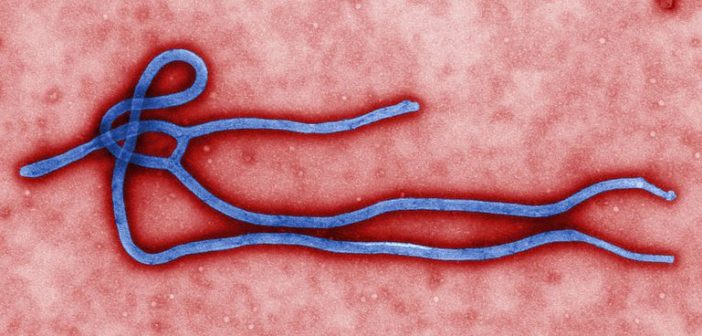


Ebola virus. CDC/Cynthia Goldsmith
Guinea has confirmed that 59 people have died in an outbreak of Ebola, with authorities concerned that the disease may have spread to neighbouring Sierra Leone.
Cases of the Ebola have been recorded in the Guinea’s capital, Conakry, as well as in the south east of the country, with international labs confirming the findings. Health officials have registered 80 suspected cases of the disease, and 59 deaths over the last six weeks.
The outbreak has prompted international medical charity Médecins Sans Frontières (MSF) to launch an emergency response and send 33 tonnes of medicines, medical equipment and supplies to the country so that patients can be isolated and sanitation measures put in place. The organisation already has 24 doctors, nurses, logisticians and hygiene and sanitation experts in Guinea, and they will bring in additional staff in the coming days.
Ebola is a viral haemorrhagic fever, where sufferers present with a fever and feelings of general malaise, followed by nausea and abdominal pain, diarrhoea, vomiting, severe headaches, depression, and seizures. The disease is one of the most virulent pathogens to infect humans, with transmission through contact with blood, secretions, and other bodily fluids, and has a fatality rate of up to 90%.